Course Description
The course develops the main concepts, observations and experimentation of the early theories of attachment and bonding, in the mother/infant or primary caregiver dyad. It deepens into research findings on the topic and the practices of contemporary thinkers and clinicians. These perspectives are interrelated with some of the principles of neoReichian body psychotherapy, following Wilhelm Reich, and somatic therapy, particularly Biosynthesis and Bioenergetic Analysis. The course approach can be applied to the reflection and the reading of behaviour, energy and bodies across different stages of the life cycle. The attempt to establish attachment and attunement relationships, and the resolution of conflicts arising from communicational misattunement, are constants throughout human life.
Topics

Dr. Liliana Acero
Liliana Acero spent decades building Relational Body Psychotherapy into a recognized field, with research, clinical work and training across USA, Canada, Argentina, Brazil and Chile. Her approach bridges academic theory and direct clinical work.
Ph.D., University of Sussex, 1983; Post-Doctorate, University of Massachusetts and Brown University, 1992-1994. CNPQ Post-Doctorate (National Council for Scientific and Technological Development, Brazil). Researcher in the Graduate Program on Public Policy, Strategy and Development at INCT (National Institute of Science and Technology, Federal University of Rio de Janeiro). Researcher in international protection, ENDURE UNICAMP, São Paulo, on COVID-19 health impacts in Brazil's periphery, and researcher on the international Phoenix project on migration and mental health in Chile, Fundación Cuerpo y Energía. Visiting Professor, Federal University of Rio de Janeiro (PPED) since 2009. Collaborative Professor and Researcher in the Graduate Program. Former International Trainer in Biosynthesis and Bioenergetic Analysis for 35 years, creator of the theoretical and clinical field of Relational Body Psychotherapy.
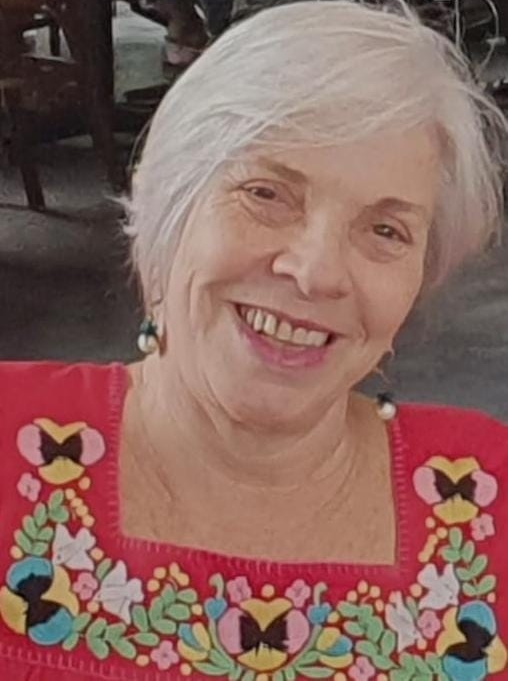
Silvia Lessa Bastos
Secondary education at ST. Mary's High School, New York, USA, 1972. Clinical Psychologist, Universidade Santa Úrsula (USU), Rio de Janeiro, 1978. Specialization in Psychoanalysis (CEPCOP-USU), 1998. Psychoanalytic training at Livre Associação Psicanalítica (LAP), 2002. Body Psychotherapist in Biosynthesis, International Institute for Biosynthesis, Heiden, Switzerland, 2006. Study Group Coordinator, Clinical Supervisor and Assistant in International Biosynthesis Trainings, Rio de Janeiro, 2005-2010. Over 40 years of experience as a clinical psychologist with adults, children and couples.
General Aims
The course is useful, both personally and professionally, for understanding and feeling our main ways of relating to others, their positive and negative impact on our bodies, and for implementing the necessary changes to increase our capacity for attunement. Each topic begins with an energetic circulation, a brief introduction, followed by practical and experiential exercises.
Health and mental health professionals, educational psychologists, sociologists, education professionals, therapists in general, and anyone interested in the topic.
Topics
Class 1: Attuned and non-attuned relationships
Class 2: A pioneering approach: the “strange situation” experiment
Class 3: Primary bonds in infants: the “still face” experiment
Class 4: Understanding attunement through the body
Pedagogical Approach
Each two-hour class combines theoretical presentation, experiential practice and group work:
- 45 min: Presentation by Prof. Liliana Acero and/or Prof. Silvia Lessa Bastos with audiovisual support
- 15 min: Participant questions and observations
- 30 min: Small group discussion and guided experiential exercises
- 30 min: Exchange in the large group
Due to the sharing of personal experiences in small groups, absolute confidentiality is requested regarding their content.
Pricing
Discount 35% — Full payment up to 1 month before the course starts
International Certificate
International Certificate of participation from Fundación Cuerpo y Energía Chile (Neo-Reichian Theory and Methods of Chile). The only requirement is 75% attendance. The certificate states the number of hours completed.